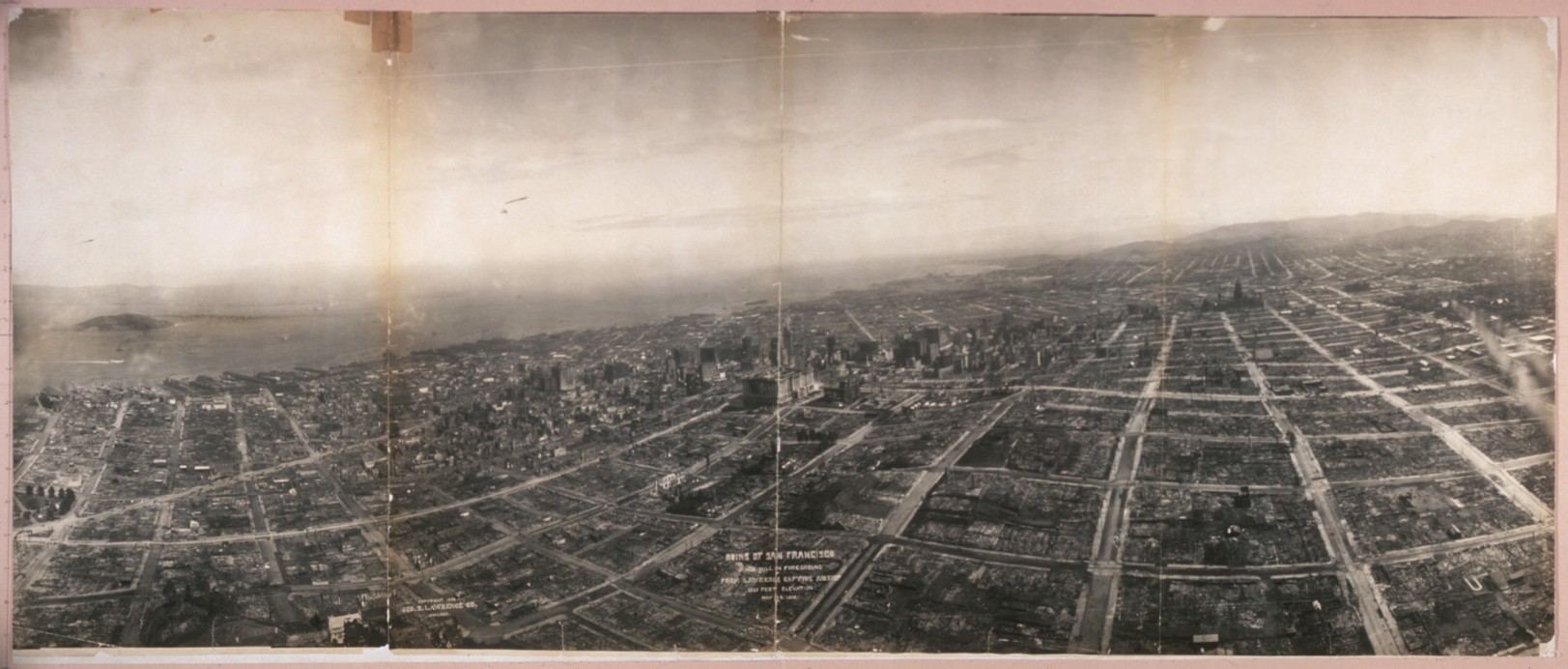
How do you fight a fire when an earthquake breaks the pipes?
San Francisco's earthquake risk has led engineers to create an independent firefighting water network, while its location beside San Francisco Bay makes seawater a very practical and useful emergency water supply. The system also has separate pipes and waterfront pumping stations that respond directly to the city's environment. This is all done to make sure they have a backup system in place in case an earthquake damages the ordinary water pipes. 12
See how the backup worksThe disaster that
exposed the problem
April 181906
Earthquake
Shaking damages the city's infrastructure.
Broken pipes
Water supply is cut when it is needed most.
Spreading fires
Firefighters face fires without dependable water.
On April 18, 1906, a magnitude 7.8 earthquake struck the San Francisco Bay Area. The earthquake severed the pipeline carrying water into the city, and it left numerous fires burning for three days. Nearly five square miles of the city were destroyed by the earthquake's shaking and fire. 4
These events revealed a very dangerous weakness in San Francisco's response: the same earthquake that started the fires could also cut off the protection and the water needed to extinguish those fires. 34
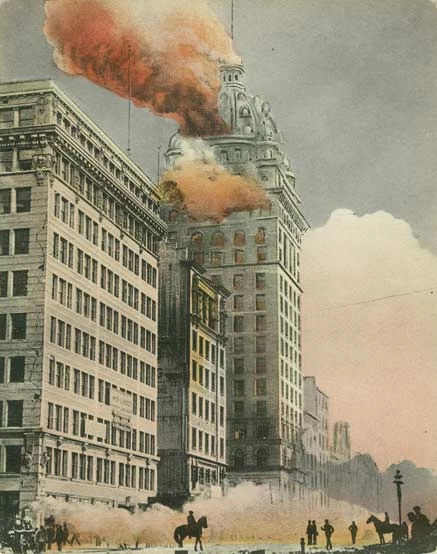
The National Park Service explains that ruptured gas mains across the city helped start fires, while broken water mains made firefighting very difficult. San Francisco therefore needed a water supply that could remain available when its ordinary system failed. 3
Who built the
backup system?
The earthquake and fire expose the need for a backup. 4
San Francisco voters approve funding. 5
The Auxiliary Water Supply System enters service. 5
1906: The failure that prompted a different design.
San Francisco's city government and municipal engineers developed the Auxiliary Water Supply System, now called the Emergency Firefighting Water System. Voters approved funding in 1908, and the system entered service in 1913. Its original coverage focused on the northeastern downtown area of San Francisco, which was devastated by the 1906 fire. City Engineer Marsden Manson helped direct the work, with city employees under his direction designing Pumping Station No. 2. 5
This innovation was an independent, much higher pressure network dedicated to fire protection. It combined pipes, elevated water storage, pumping stations, fireboats, and underground cisterns, with connections that allowed the system to draw on Bay water. 1
How the Bay
shaped the design
Ordinary pipes and the emergency network are shown as separate systems.
San Francisco's waterfront offered a very large and nearby water source that did not depend on water arriving through the city's normal supply lines. Engineers took advantage of San Francisco's location by incorporating seawater pumping stations and waterfront connections into the emergency system. 2
These features allowed firefighters to draw from the Bay and deliver seawater through the firefighting network. Fireboats could also pump seawater into the system. The connection is very specific here: access to the Bay shaped the decision to build equipment that could collect and distribute saltwater during an emergency. 2
Separating the firefighting network from the domestic water system added another level of precaution and protection. For example, damage to ordinary water pipes would not automatically eliminate every single firefighting supply. This was a response to the extraordinary failure exposed in 1906. 5
Evidence: waterfront connections
The system includes 52 connections along San Francisco's northeastern waterfront where fire engines can draw water from San Francisco Bay. This supports our claim because it shows that access to seawater became a deliberate part of San Francisco's firefighting infrastructure. 2
Evidence: photograph
of the disaster
The photograph shows a major building burning during the disaster. Alongside the National Park Service's explanation of broken water and gas mains, it illustrates why San Francisco needed a more dependable firefighting water supply. The image shows massive destruction, and the accompanying historical account explains the infrastructure failure. 3
Conclusion
Altogether, San Francisco's environment presented both a danger and a key resource. Earthquakes threatened water delivery, while San Francisco Bay offered an accessible emergency water supply. Engineers responded by creating a separate firefighting network capable of using seawater. The system showed how people adapted infrastructure to a local hazard while putting a nearby natural resource to use. 12
Sources & credits
- 1
San Francisco Public Works
Emergency Firefighting Water SystemTeacher provided source. System purpose, independence, high pressure, 1913 service date, and components.
- 2
San Francisco Public Utilities Commission
Emergency Firefighting Water SystemWaterfront suction connections, fireboats, and seawater supply. The reported 52 connections describe the later system.
- 3
National Park Service
1906 Earthquake: Fire FightingBroken gas and water mains, firefighting difficulty, and the historical image of the Call Building burning.
- 4
U.S. Geological Survey · 2006
Facing the Great Disaster: How the Men and Women of the U.S. Geological Survey Responded to the 1906 “San Francisco Earthquake” PDFElizabeth M. Colvard and James Rogers. April 18, 1906; magnitude 7.8; the severed supply pipeline; three days of fire; nearly five square miles destroyed.
- 5
National Park Service / Historic American Engineering Record
San Francisco Fire Department: Pumping Station No. 2, HAER CA-1 PDFHosted by the Library of Congress. Funding in 1908, service in 1913, original downtown coverage, Marsden Manson, and the independent network. Relevant material: PDF pages 8 to 10.
Image credits
Panorama: Geo. R. Lawrence Co., May 29, 1906. Library of Congress.
Call Building photograph: Bob Bowen Collection / National Park Service. Image supplied for this project.
A project by
Aditya Bhatia
Hirdhaan Jaguwala